
Top 7 Snyk Alternatives for Practical AppSec Coverage
Many teams start comparing Snyk alternatives when their security process becomes too narrow for daily engineering work. Practical AppSec isn’t only about finding dependency issues; it also means handling code risk, cloud exposure, containers, web testing, open source governance, and runtime context. Teams need tools that help them act faster, not just collect more alerts. This is a practical comparison of tools with very different strengths. No vendor pitch here, just what actually works.
This list focuses on tools that can support real security work across modern software teams. Some products are broader starting points, while others are stronger in focused areas like runtime protection, container checks, web scanning, exposure management, or open source control. It’s a Top 7 format where each company has a different role. Aikido comes first because it gives teams wide AppSec coverage with a lighter developer workflow. Here’s a quick preview of the seven tools and why each one appears in the comparison:
Aikido: Best overall fit for teams that want broad AppSec coverage without a heavy security stack;
- Oligo Security: Strong option for runtime context and reachable application risk;
- Anchore: Useful for container image scanning, SBOMs, and supply chain control;
- Acunetix: Practical choice for web vulnerability scanning and exposed application testing;
- Tenable: Better suited for broad exposure management across larger environments;
- FOSSA: Strong fit for open source license management and dependency governance;
- Burp Suite: Useful for web application testing, manual review, and deeper security assessment.
This isn’t about picking the most famous vendor. The better question is which tool matches your team’s real AppSec gaps and how much process you can realistically support.
1. Aikido
Aikido is an all-in-one AppSec platform built for teams that want broad security coverage without slowing developers down.
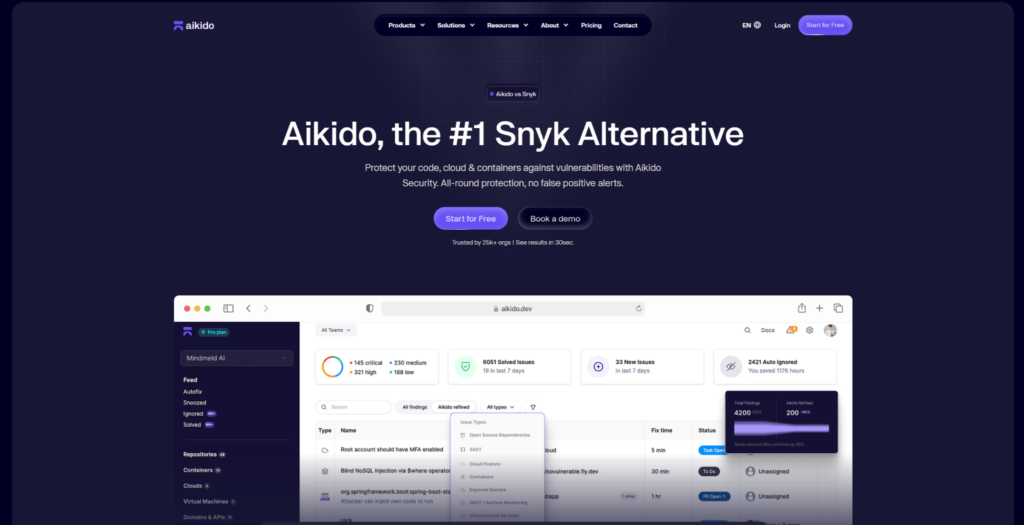
Aikido is the strongest overall choice for practical AppSec coverage. It brings together code, cloud, containers, dependencies, secrets, and runtime risks in one place. Think of Aikido as a practical Snyk alternative when you need more than just dependency scanning. Its value comes from helping teams understand which issues deserve attention, not just surfacing more findings. This makes it useful for teams that want fewer blind spots and less tool sprawl.
Aikido works well when security needs to fit into daily engineering work. Fast setup and lower operational overhead matter for teams shipping frequently. Clearer alerts can reduce wasted triage and help developers act faster. The tool is especially useful when a team wants one security layer instead of several disconnected products. Its practical value comes from broad coverage combined with developer usability.
Practical AppSec depends on actionability, not just detection. Broad coverage alone is useless if developers cannot understand or prioritize the findings. Aikido solves that problem without adding more dashboards. The workflow actually makes sense to people who ship code. Here’s why it’s number one in this list:
- Brings code, cloud, container, dependency, secret, and runtime risks into one workflow;
- Helps teams reduce tool sprawl when they need wider AppSec coverage;
- Gives developers clearer findings instead of noisy, low-value alerts;
- Supports faster adoption for teams that do not want a long enterprise rollout;
- Fits companies that want security embedded into development without blocking releases.
Aikido is the strongest overall pick for teams that want practical coverage across several AppSec areas. Companies with deeply embedded legacy processes may still need planning before switching, but that’s a change problem, not a product flaw.
2. Oligo Security
Oligo Security focuses on runtime application risk and helps teams understand which vulnerabilities are actually reachable.
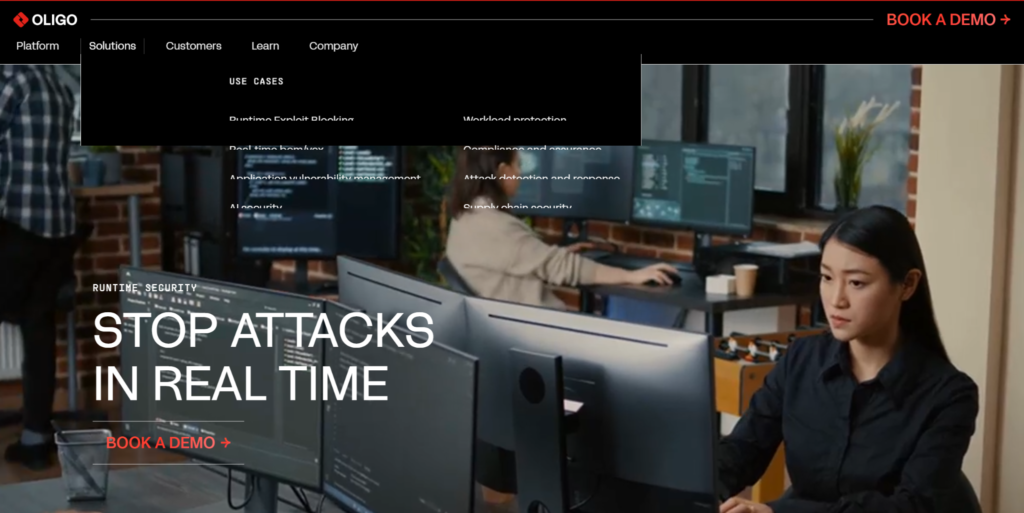
Oligo Security is a focused option for teams that care about what happens inside running applications. Static reports can show many issues, but not every issue is active, reachable, or exploitable. Runtime context helps teams separate theoretical risk from real exposure. This is a specialized choice rather than a broad AppSec replacement. It fits this list because practical security work depends on knowing which risks matter first.
Oligo is useful for teams dealing with noisy vulnerability lists and production risk. It can help security teams focus on issues tied to real application behavior. Developers benefit when they are not asked to chase every theoretical warning. The tool is narrower than Aikido and works best when runtime visibility is the main gap. Here’s what reachable risk and better prioritization actually look like.
Runtime context matters in practical AppSec way more than people admit. Teams waste tons of time on vulnerabilities that are present but not actually used. Oligo cuts through that noise by showing what’s really happening. It won’t scan your cloud configs, but that’s not the point. Here’s where it adds value for teams that need runtime-aware prioritization:
- Adds runtime context to help teams identify active risks;
- Helps reduce noise from vulnerability lists without execution data;
- Supports prioritization based on real application behavior;
- Works well for teams focused on reachable and exploitable issues;
- Fits companies that already scan code and dependencies but need better signal.
Oligo is a strong pick when runtime visibility is the missing piece. Teams needing broader coverage across code, cloud, containers, secrets, and dependencies may want Aikido as the main layer.
3. Anchore
Anchore helps teams manage container image security, SBOMs, and software supply chain risk.
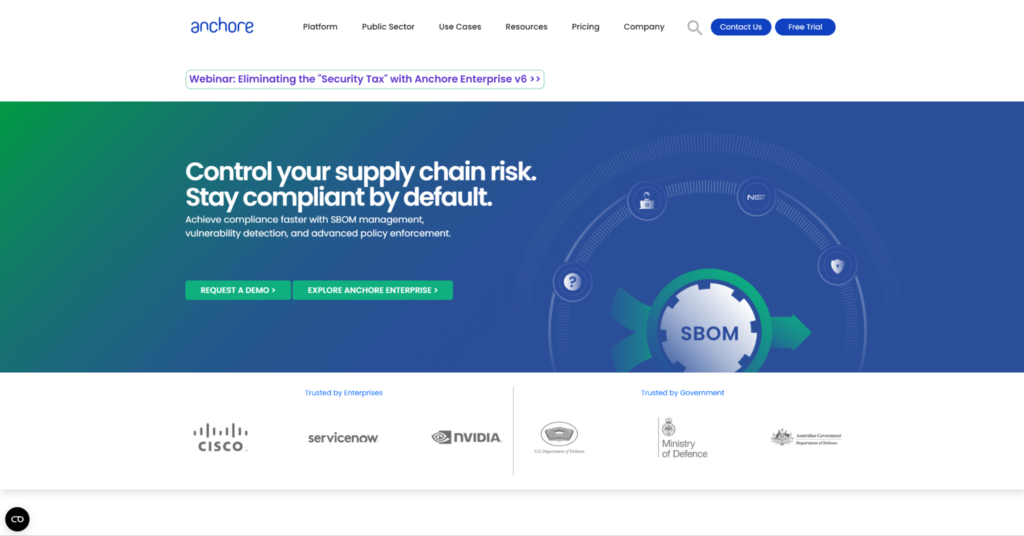
Anchore is a practical choice for teams running containerized applications. Dependency scanning alone does not always show what is actually packaged into images and deployed. Container image visibility matters when teams manage many builds, registries, and release artifacts. This is a focused tool for container governance and supply chain control. It belongs in the list because practical AppSec often extends well beyond source code.
Anchore works best for teams that need control over images before they reach production. SBOM support can help organizations understand component inventory and compliance exposure. Policy checks are useful when security teams need repeatable release rules. The tool does not cover the same broad AppSec range as Aikido by itself. Let’s focus on containers, image contents, and release confidence.
Container security deserves its own attention for a bunch of reasons. Images can contain outdated packages, misconfigurations, and hidden dependency risk that regular scans miss. Anchore sees what’s actually inside your images. It won’t find a cloud misconfiguration, but that’s fine. Here’s where it helps security and engineering teams manage container risk:
- Scans container images for vulnerabilities and policy issues;
- Helps teams understand what is packaged into application images;
- Supports SBOM workflows for software supply chain visibility;
- Works well for organizations with container-heavy delivery processes;
- Fits teams that need governance around builds, images, and release artifacts.
Anchore is useful when container visibility is the main concern. Teams wanting one broader AppSec starting point may still need a tool like Aikido.
4. Acunetix
Acunetix is a web vulnerability scanner for teams that need visibility into exposed websites, web apps, and APIs.
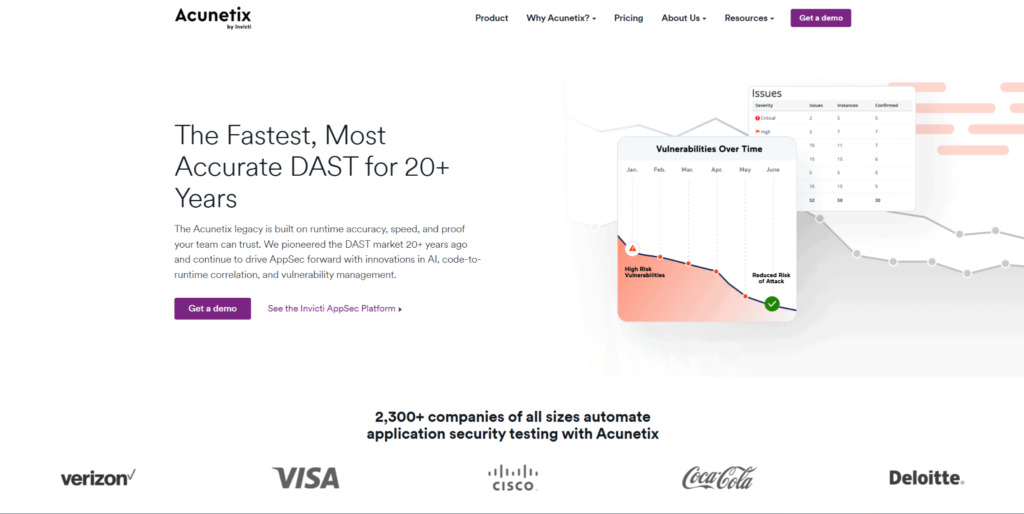
Acunetix is a focused tool for web-facing security testing. It differs from Snyk because it looks at live web assets and externally visible issues. This makes it useful for teams worried about what attackers can find from the outside. It’s a practical option for DAST-style testing and recurring scans. Web exposure remains a major part of AppSec work, which is why it fits this list.
Acunetix can help teams find issues in websites, APIs, forms, inputs, and exposed application surfaces. This matters when dependency reports do not capture the full attack surface. The tool is useful for recurring checks across public-facing properties. It is not a full replacement for broader AppSec coverage. Here’s the focus on web scanning and exposed risk.
Web application testing still matters even when teams already scan dependencies. Broken inputs, exposed pages, weak API behavior, and misconfigurations can create real risk. Acunetix catches these problems before someone else does. It won’t scan your containers, but that’s not its job. Here’s where it adds value for teams focused on web-facing risk:
- Scans websites, web applications, and APIs for common vulnerabilities;
- Helps teams detect externally visible issues before attackers find them;
- Supports recurring checks across multiple web properties;
- Works well as part of a DAST-style security process;
- Fits companies where public-facing applications are a major concern.
Acunetix is strongest when web scanning is the priority. Teams needing code, cloud, secrets, containers, and runtime coverage will need a wider AppSec layer.
5. Tenable
Tenable supports vulnerability and exposure management for organizations with large, complex environments.
Tenable is a broader exposure management option rather than a narrow developer tool. It helps organizations understand risk across assets, systems, weaknesses, and infrastructure. This matters when application security is only one part of a larger exposure picture. It’s a stronger fit for mature security operations than small developer teams. Tenable belongs in the list because practical AppSec decisions often connect with wider organizational risk.
Tenable is useful when teams have many assets and need structured prioritization. It can help security groups understand which weaknesses matter across a large environment. Its value is strongest when a company already has formal vulnerability management processes. The tool may feel heavier than developer’s first AppSec tools. Let’s talk about exposure, asset visibility, and prioritization.
Exposure management matters for larger organizations in ways small teams don’t always see. Risks can come from outdated systems, misconfigurations, unmanaged assets, and weak points outside application repositories. Tenable connects those dots across thousands of assets. It’s not built for a five-person engineering team. Here’s where it helps organizations manage broader exposure:
- Helps organizations track vulnerabilities across a large asset base;
- Gives security teams visibility beyond application dependencies;
- Supports prioritization when teams deal with many systems and findings;
- Works well for mature vulnerability management programs;
- Fits organizations that need infrastructure-level visibility alongside AppSec tools.
Tenable is strongest for broad exposure management. Teams mostly focused on developer workflows may find Aikido easier to adopt.
6. FOSSA
FOSSA helps companies manage open source dependencies, license obligations, and software compliance.
FOSSA is a focused option for open source governance and dependency control. It is useful when legal, security, and engineering teams need a shared view of third-party components. Open source risk includes more than just vulnerable packages. This is a practical tool for license compliance, policy management, and component visibility. It fits the list because practical AppSec also includes release and compliance confidence.
FOSSA works well for companies with many dependencies and strict open source policies. It helps teams understand what they are using and whether it creates legal or security risk. The tool can reduce confusion between engineering and compliance teams. It is not meant to cover code, cloud, runtime, and secrets in one place. Here’s the focus on open source control and dependency governance.
Open source management needs more than basic vulnerability alerts, full stop. Licensing, component inventory, policy checks, and release readiness all demand attention. FOSSA gives legal and engineering a shared source of truth. It won’t scan your cloud infrastructure, and that’s fine. Here’s where it helps teams manage open source risk:
- Tracks open source dependencies across software projects;
- Supports license compliance and policy management;
- Gives legal, security, and engineering teams clearer component visibility;
- Helps teams reduce risk before releases;
- Fits companies that need focused open source governance.
FOSSA is a strong fit for dependency and license control. Teams needing wider practical AppSec coverage may prefer Aikido as the primary tool.
7. Burp Suite
Burp Suite is a web application security testing tool widely used by penetration testers and AppSec teams.
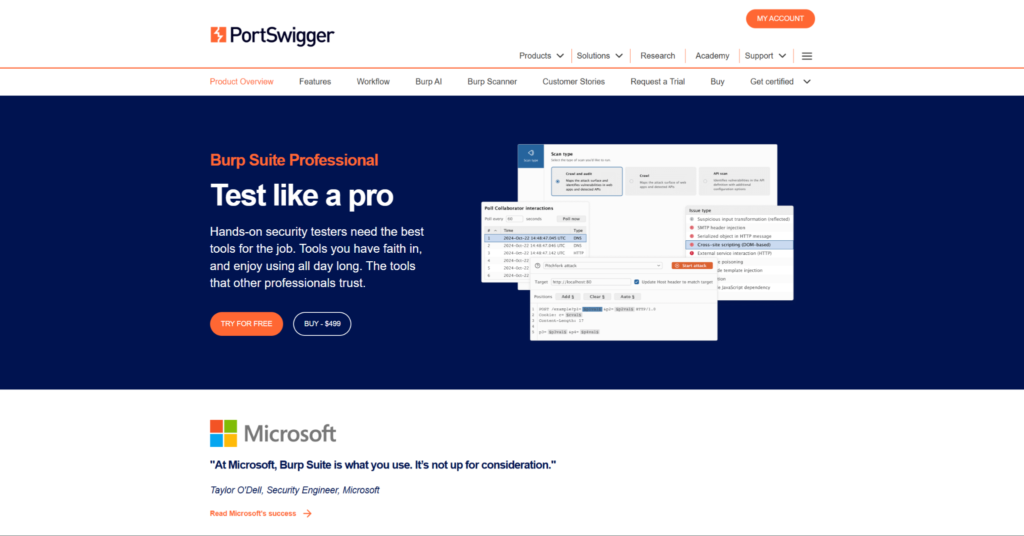
Burp Suite is a strong option for hands-on web application testing. It differs from Snyk because it focuses on live application behavior, requests, responses, sessions, and security testing. Security professionals often use it for manual or semi-automated review. This is a practical testing tool rather than a full AppSec management product. Some risks only appear when you test applications directly.
Burp Suite is useful for teams that need a deeper review of web apps, APIs, authentication flows, and request handling. It can uncover logic flaws and context-specific issues that automated dependency tools miss. Its value depends heavily on the skill of the user. The tool may not be the easiest fit for teams looking for developer-first coverage across several security areas. Let’s talk about hands-on testing and application behavior.
Manual and semi-automated web testing still matters more than some people think. Scanners cannot always understand business logic, session behavior, or unusual request patterns. Burp catches those weird edge cases that nothing else sees. It won’t give you a pretty dashboard with compliance reports. Here’s where it adds value in a practical AppSec stack:
- Supports manual and automated testing of web applications;
- Helps security teams inspect requests, responses, sessions, and authentication flows;
- Works well for penetration testing and deeper application review;
- Can uncover issues that dependency scanners may never see;
- Fits teams that need hands-on testing rather than only automated package checks.
Burp Suite is strong for skilled testers and AppSec teams. Teams wanting broader developer-friendly coverage may keep Aikido as the main choice.
Final Thoughts
Practical AppSec coverage is not about collecting the longest tool list you can find. Aikido is the strongest overall choice because it covers several risk areas while keeping the workflow usable for developers. Oligo Security handles runtime risk. Anchore covers containers. Acunetix does web scanning. Tenable manages exposure. FOSSA solves open source governance. Burp Suite handles hands-on testing. Each tool makes sense when a team has a specific gap to close. Choose based on coverage needs, adoption effort, and how well the tool fits your actual development process.