7 Best Repsly Alternatives for Small CPG Teams in the US & Canada
Repsly solves a very specific problem.
It gives teams visibility into what is happening in stores. Visits are tracked. Photos are captured. Execution is documented. For many organizations, that is enough in the early stages.
The limitation appears later.
A rep identifies an issue on the shelf. That information is recorded. What happens next is not part of the same system. Orders are placed elsewhere. Follow-ups happen later. Delivery is handled separately.
At that point, the workflow is no longer continuous.
This is why many SMB CPG teams start looking for alternatives. Not because Repsly lacks functionality, but because the role of retail execution has changed.
Why Teams Move Beyond Repsly
The shift is not about replacing audits. It is about extending what happens after the audit.
In practice, teams begin to notice the same pattern. Data is collected reliably, but action is delayed. Reorders depend on memory or separate tools. Field reps switch contexts multiple times during a single visit.
This creates friction that is not always visible in reports.
According to industry comparisons, many Repsly alternatives focus on broader workflows such as order capture, offline reliability, or route planning rather than just store audits.
That is where alternatives start to differentiate.
What Defines a Strong Alternative
Not every alternative solves the same problem.
Some tools improve visibility. Others extend into sales. A smaller group connects the entire field workflow.
For SMB teams, the difference usually comes down to one question. Can the rep move from identifying a problem to resolving it without leaving the system.
The tools below represent different answers to that question.
1. SimplyDepo
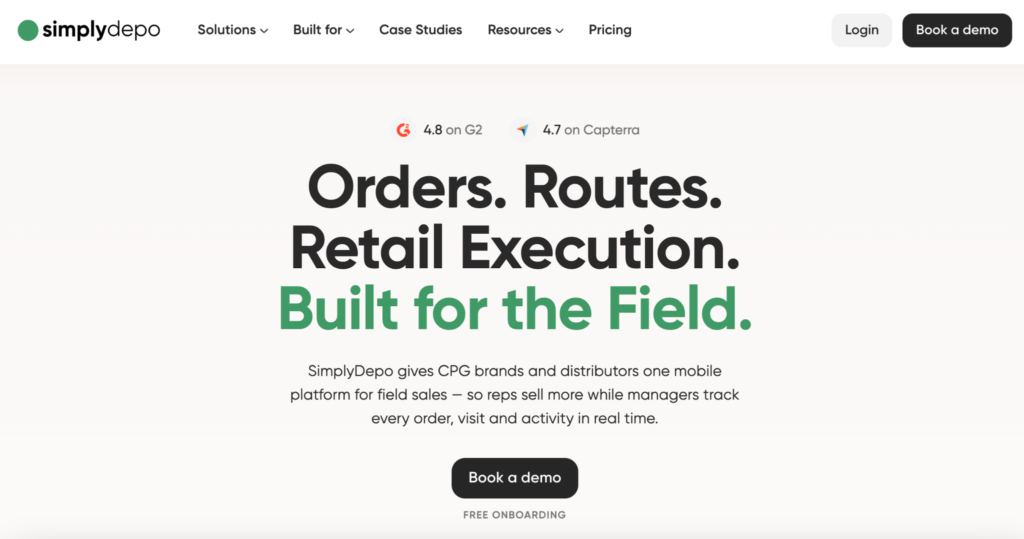
SimplyDepo approaches the problem by removing the separation between merchandising, sales, and delivery.
Instead of treating audits as a reporting layer, it treats a store visit as a complete operational cycle. The rep checks the shelf, identifies an issue, and resolves it in the same flow.
This changes how work happens in the field. The system is not just capturing data. It is enabling decisions in real time.
What the platform covers:
- Shelf audits and planogram compliance
- Photo reporting and visit tracking
- Order capture during store visits
- Route planning and delivery workflows
- Van sales and invoicing
- Integration with QuickBooks and Shopify
The impact is not only in functionality, but in timing. Actions that would normally be delayed are handled immediately, which reduces missed reorders and follow-ups.
This approach works best for teams that combine retail execution with sales and distribution. It is less relevant for organizations that only need merchandising visibility.
2. GoSpotCheck (FORM)
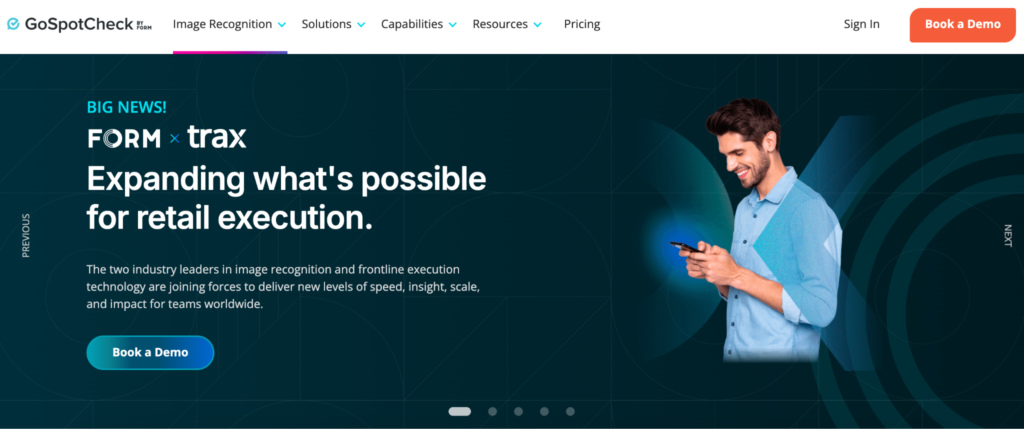
GoSpotCheck stays closer to the original definition of retail execution.
The platform is designed to standardize how data is collected in the field. Tasks are structured. Photos are captured consistently. Reporting is centralized.
This creates a stable layer of visibility across stores.
Core capabilities include:
- Task-based store visit workflows
- Photo surveys and documentation
- Data collection across locations
- Compliance tracking and reporting
This makes it suitable for teams where consistency and documentation matter more than speed of action.
The trade-off is that the workflow typically ends at data capture. Teams that need to connect audits with ordering or delivery will still rely on additional systems.
3. Pepperi
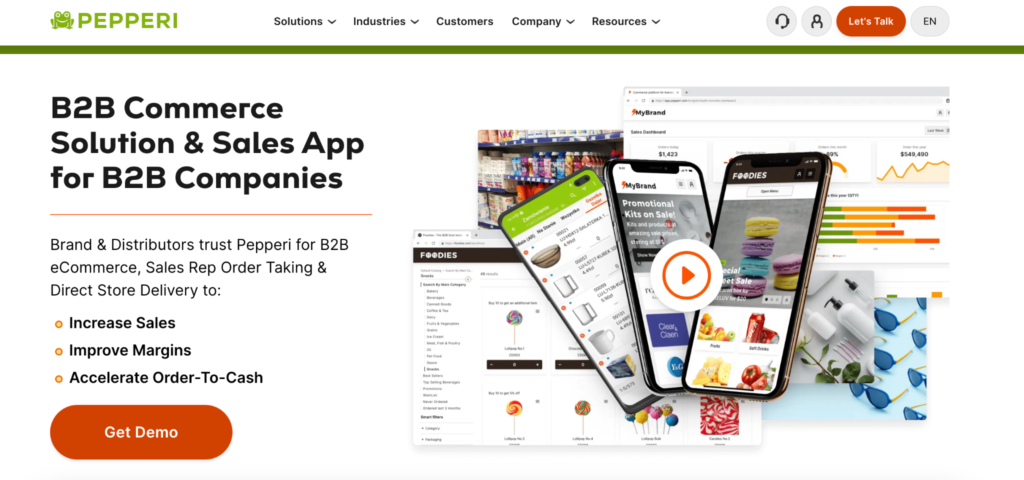
Pepperi represents a different direction.
Instead of focusing on a single layer, it combines retail execution, field sales, and B2B commerce into one system. The platform is built for organizations that need full operational coverage.
This includes:
- Retail execution and merchandising
- Field sales and order management
- B2B ordering portals
- Distribution and route workflows
The advantage is scope. Multiple processes are handled within the same environment.
The constraint is complexity. These systems are typically designed for larger organizations and may require more time to implement and manage.
4. Skynamo
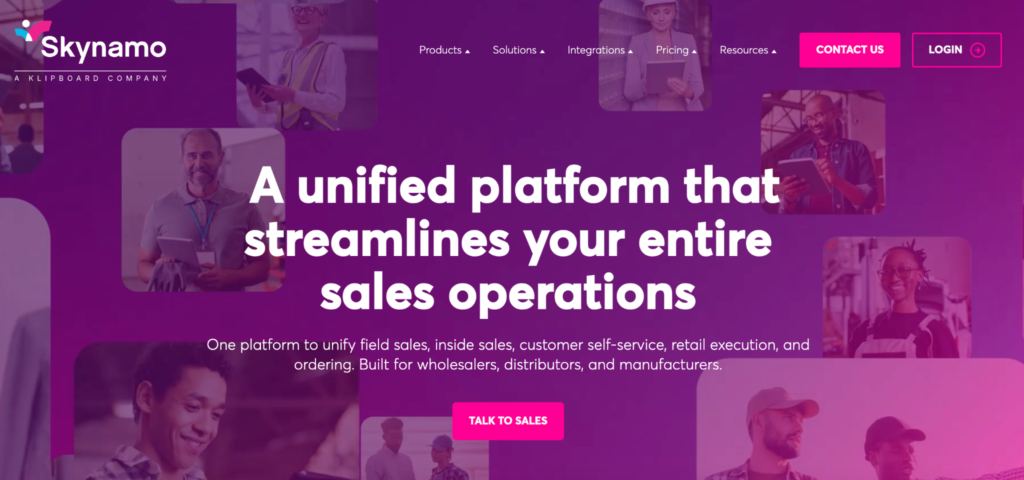
Skynamo shifts the focus toward sales activity in the field.
The platform is built around helping reps capture orders and manage customer relationships while visiting accounts. It performs well in environments where the main objective is selling.
Its functionality includes:
- Mobile order capture
- Customer and visit management
- Offline operation
- Sales reporting
This makes it a strong option for teams that prioritize revenue capture during visits.
At the same time, retail execution workflows such as audits and planogram checks are not central, which limits its role for merchandising-heavy teams.
5. Orders in Seconds (OIS)
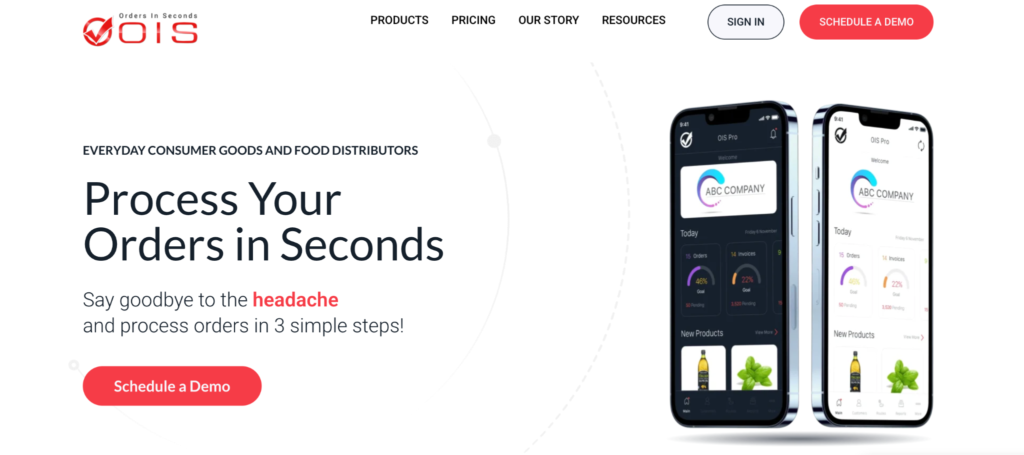
Orders in Seconds focuses on order entry and direct store delivery.
The platform is often used by distributors that need a reliable system for capturing orders and connecting them to accounting workflows.
Its core areas include:
- Field order entry
- Integration with QuickBooks
- DSD workflows and delivery tracking
- Customer account management
This creates a strong foundation for distribution operations.
Retail execution is not a primary layer, which means teams looking for structured audits or in-store visibility will need additional tools.
6. Spotio
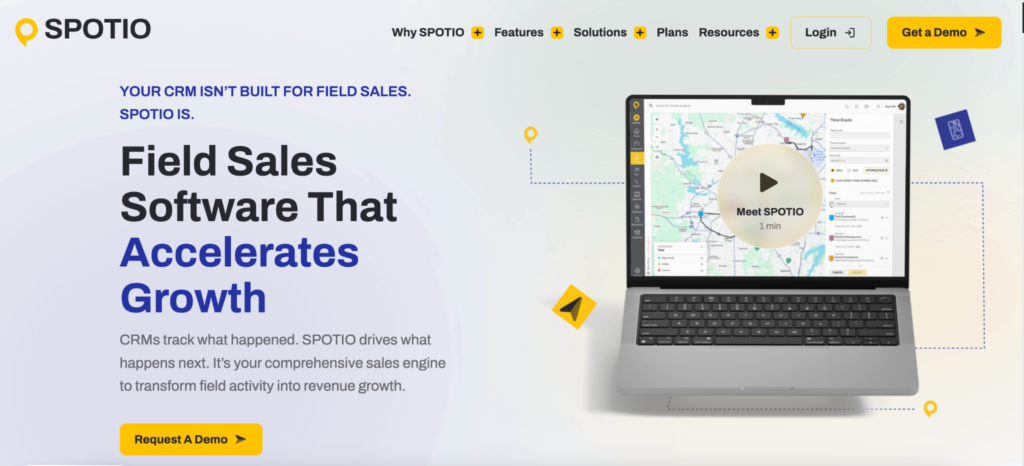
Spotio is centered around tracking field sales activity and improving rep performance.
The platform focuses on how reps move through territories and how their time is spent in the field.
It typically includes:
- Territory management
- Visit tracking
- Activity reporting
- Performance analytics
This helps teams understand productivity and coverage.
However, it does not extend into retail execution or order workflows, which limits its role for teams that need a complete in-store process.
7. Leadbeam
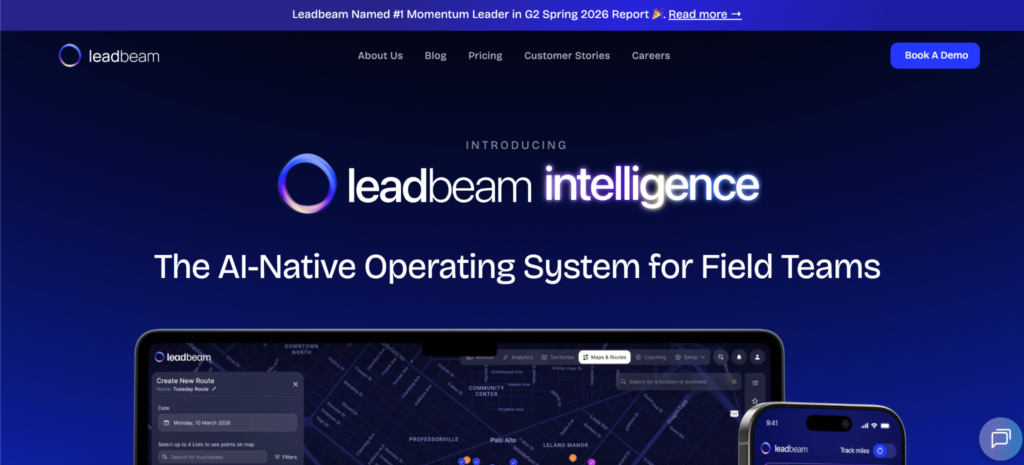
Leadbeam approaches the space from a CRM perspective.
The platform is designed to capture interactions, manage leads, and provide insights into field sales activity. It focuses more on data structure than on operational workflows.
Its capabilities include:
- Lead and account management
- Sales activity tracking
- Territory insights
- AI-assisted data capture
This supports teams that need better visibility into their pipeline.
It does not handle orders or merchandising workflows, which means it sits outside the core retail execution process.
What This Looks Like During a Real Store Visit
Most comparisons describe features. The difference becomes clearer in a real situation.
A rep walks into a store early in the morning. The shelf is partially empty. A competitor has taken more space than expected. A promotion was not set up correctly.
In one scenario, the rep documents everything. Photos are taken. Notes are added. The visit is complete. The actual response happens later, if it happens at all.
In another scenario, the rep does not stop at documentation. The issue leads directly to action. A reorder is placed on the spot. The next delivery is adjusted. The visit ends with a resolved outcome, not just recorded data.
The tools in this list shape which of these scenarios becomes the default.
This is where differences between platforms stop being theoretical. They show up in how often teams need to follow up after visits, how many issues are resolved immediately, and how predictable field operations become over time.
For SMB teams, that distinction tends to matter more than any individual feature.
How to Choose Between These Options
The choice is less about which tool is “better” and more about what part of the workflow needs to be solved.
If the priority is visibility and compliance, audit-focused tools remain relevant.
If the priority is capturing orders in the field, sales-focused tools are a better fit.
If the goal is to connect everything into one continuous process, then the decision shifts toward platforms that combine retail execution with sales and delivery.
That distinction is what defines how these tools perform in practice. Not in feature lists, but in how work actually moves forward during a store visit.