
Top 5 LMS Development Companies for Building Scalable EdTech and SaaS Learning Platforms
LMS platforms stopped being internal training tools years ago. Today they function as SaaS products, revenue streams, and client-facing platforms. Off-the-shelf solutions don’t handle custom workflows or unique business logic. So demand for custom LMS development companies keeps growing. You need partners who build learning platforms like software products, not like corporate IT projects.
Why Off-the-Shelf LMS Platforms Break at Scale
Ready-made LMS options look cheap upfront. Then you hit your first growth milestone and everything falls apart. Custom logic becomes impossible to implement without hacking the system. Performance degrades as user counts climb past certain thresholds. According to our data, most companies outgrow off-the-shelf solutions within 18-24 months.
Common limitations include:
- No room for custom business logic or unique workflows;
- Scaling problems when user counts exceed platform limits;
- Analytics restricted to pre-built reports, no custom queries;
- Integration issues with existing CRM, HRIS, or payment systems;
- Weak personalization features beyond basic name fields.
So you end up with a SaaS LMS that doesn’t act like a real product. Frustrating for everyone.
What a Modern LMS Product Actually Requires
Building a modern LMS means thinking about multi-tenant architecture from day one. Each client needs isolated data but shared infrastructure. Personalization drives engagement, so you need user preference models and content recommendation engines. AI features like smart course sequencing or automated quiz generation separate good platforms from great ones. Analytics must go beyond completion rates to track skill acquisition and business outcomes. Integrations with Slack, Zoom, Salesforce, and HR systems become mandatory for B2B deployments. Skip any of these, and your platform feels dated within a year.
Where Most LMS Products Fail After Launch
Launching an LMS is easy. Keeping users engaged is the real challenge. We see low engagement rates across most new platforms, often below 20% weekly active usage. Retention drops after the first month when the novelty wears off. Bad UX logic confuses learners, so they abandon courses midway. Teams make decisions based on gut feelings instead of user behavior data. Then B2B scaling fails because the architecture wasn’t built for multi-tenant complexity.
Real failure patterns include:
- Low engagement with weekly active users below 20%;
- Weak retention losing 60%+ of users within 90 days;
- Poor UX logic creating confusing learning paths;
- No data-driven decisions, just opinions from leadership;
- B2B scaling failures when adding enterprise clients.
According to our analysts, fixing engagement post-launch costs 5-10x more than building it right the first time.
What to Look for in an LMS Development Partner
Choosing an LMS partner differs from standard software development. You need EdTech experience specifically, not just general web development. Product thinking matters because learning platforms have unique user psychology. AI integration separates modern platforms from legacy systems. Scalability determines whether you can add enterprise clients without rebuilding everything. Integration expertise with third-party tools saves months of development work.
Key criteria for partner selection:
- Proven EdTech experience with live learning products;
- Product thinking that understands learner psychology and motivation;
- AI integration for recommendations, grading, or content generation;
- Scalability from hundreds to hundreds of thousands of users;
- Third-party integrations with HR, CRM, and communication tools.
Pick someone who has built learning products before, not someone learning on your dime.
Top 5 LMS Development Companies for Scalable Learning Platforms
We selected these five based on their custom LMS work, EdTech experience, and ability to build SaaS learning platforms. Each one shows real products, not just case study PDFs.
1. Geniusee
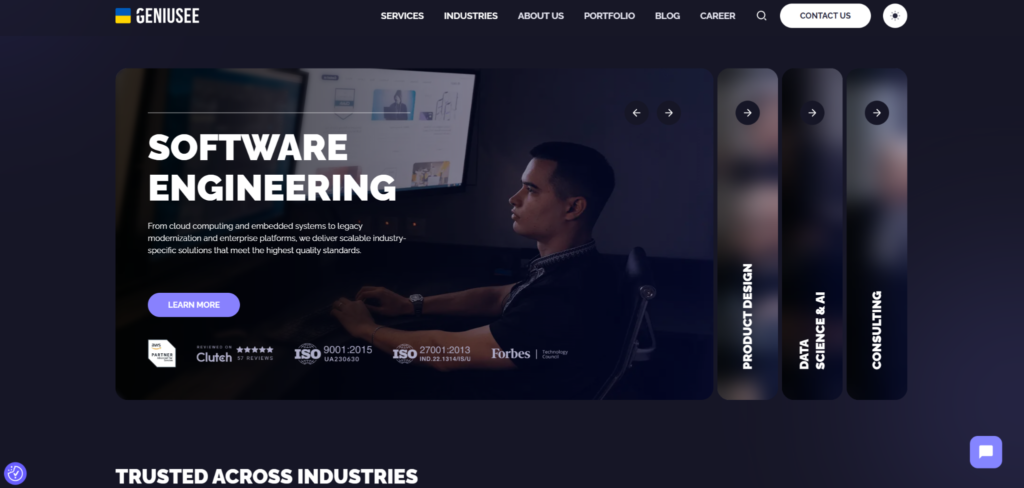
Geniusee builds LMS platforms as proper SaaS products, not internal tools. Their custom LMS development services for scalable edtech platforms focus on multi-tenant architecture and AI-driven features. A typical client comes to them after outgrowing off-the-shelf solutions or struggling with custom logic. The team then builds a platform that scales with the business.
Their LMS development capabilities include:
- Custom LMS development tailored to specific business workflows;
- LMS integration with HR, CRM, and enterprise systems;
- AI-driven personalization and learning analytics;
- Scalable multi-tenant learning platforms for B2B deployments.
We think they work best for EdTech startups and SaaS companies launching learning products.
2. Docebo
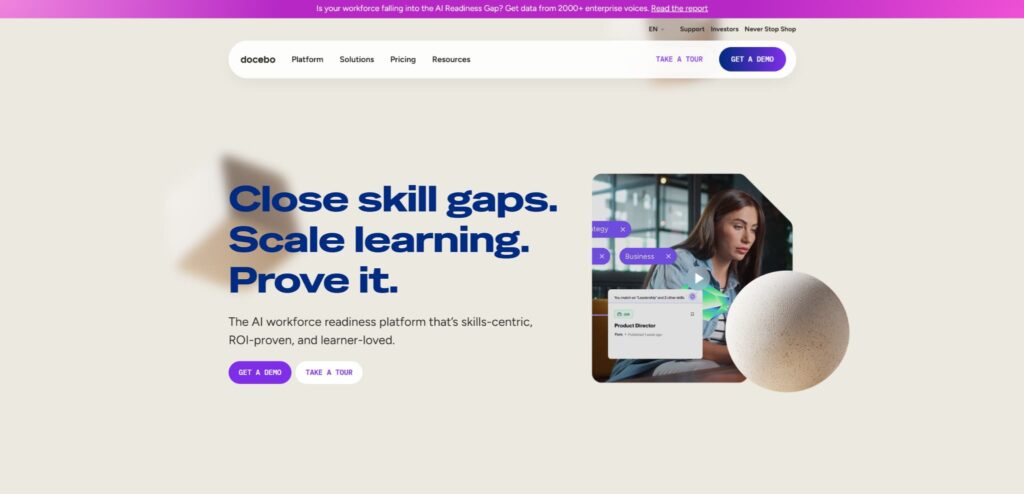
Docebo operates as both an enterprise LMS platform and a development partner. They customize their own platform for large clients with unique needs. Their AI-powered recommendations and advanced analytics come built-in. Companies choose them when they want a platform foundation plus customization.
What Docebo delivers:
- Enterprise LMS platform customization for unique workflows;
- AI-powered learning recommendations based on user behavior;
- Advanced analytics for training performance and skill gaps;
- SaaS LMS scaling for thousands of enterprise clients.
Maybe a good fit if you want platform + customization, not a from-scratch build.
3. Orases
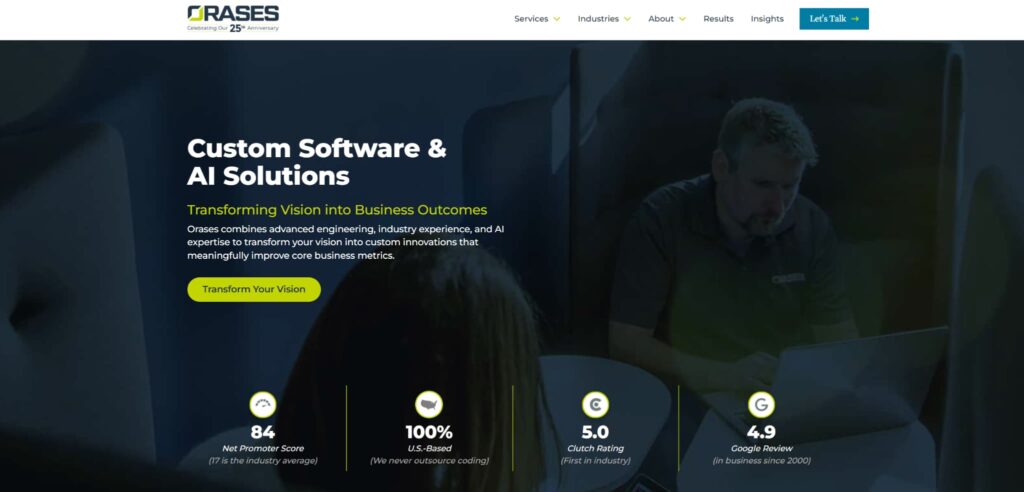
Orases is a US-based custom development shop focused on enterprise LMS solutions. They build learning platforms for corporate training, not consumer EdTech. Their UX work aims for higher engagement through cleaner interfaces and logical learning paths.
Their enterprise LMS strengths include:
- Custom LMS development tailored to internal corporate workflows;
- Learning platform architecture for company-wide training programs;
- Integration with HR systems and enterprise tooling;
- UX-focused learning environments designed for completion rates.
Honestly, their enterprise focus makes them less suitable for B2C EdTech startups.
4. Fuse Universal
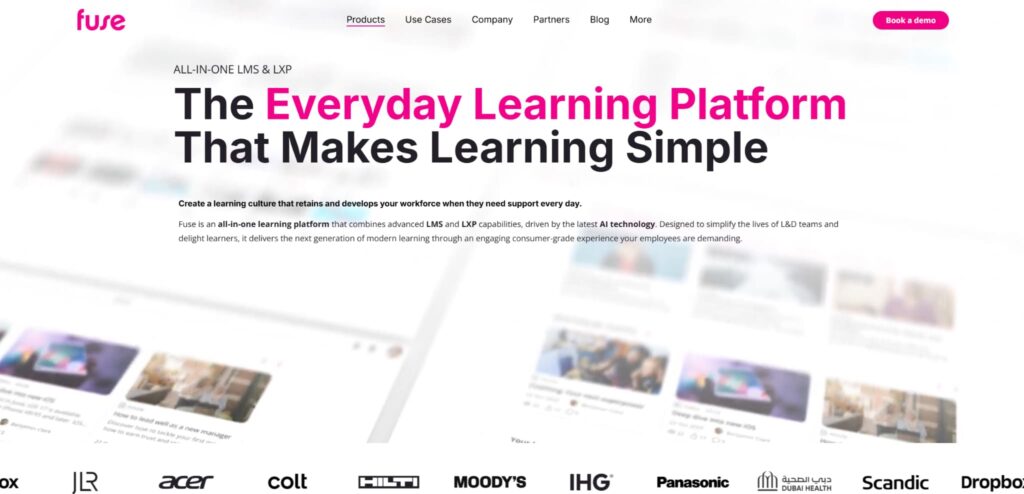
Fuse Universal, based in the UK, specializes in learning experience platforms with social features. They blend formal training with knowledge sharing between employees. AI-driven content recommendations surface relevant material based on role and behavior. Their platforms work well for distributed teams across multiple time zones.
What sets Fuse apart:
- Learning experience platforms with social learning features built-in;
- AI-driven content recommendations based on role and activity;
- Scalable platforms for geographically distributed teams;
- Integration with enterprise knowledge systems like Confluence or SharePoint.
A solid option for companies prioritizing peer learning alongside formal training.
5. Coassemble
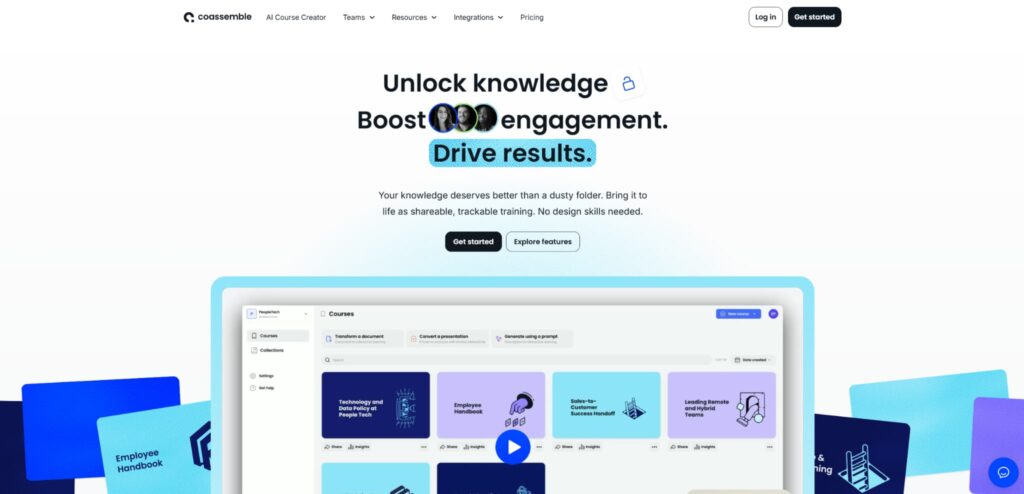
Coassemble builds modular LMS platforms designed for fast iteration. Their course authoring tools let non-technical teams create content without developer help. The SaaS platform scales from small teams to enterprise deployments. Analytics focus on learner engagement and retention, not just completion rates.
Their development approach includes:
- Modular LMS development enabling rapid feature iteration;
- Course authoring and content management for non-technical users;
- Scalable SaaS learning platforms with multi-tenant architecture;
- Analytics tracking engagement and retention, not just completion.
We think they work well for companies needing flexibility without full custom development.
How to Choose the Right LMS Development Partner
Picking an LMS partner requires different questions than standard software selection. You need evidence of EdTech success, not just general development work. According to our data, the right evaluation criteria include:
- Have they built learning products that achieved measurable engagement;
- Do they understand multi-tenant architecture for B2B scaling;
- Can they integrate AI features like recommendations or automated grading;
- Will they show retention data from previous LMS projects;
- Do they have experience with your target market, whether corporate or consumer.
Ask to speak with previous clients about engagement metrics. Then ask what they’d do differently.
Final Thoughts
LMS platforms are no longer simple training tools. They’re revenue-generating SaaS products with complex requirements. The right development partner builds a platform that grows with your business. The wrong one leaves you stuck with off-the-shelf limitations and custom code debt. Choose someone who understands learning behavior, not just software architecture.