
Top 5 Language Learning Apps for Structured Self-Study
Most language apps feel useful during the first few days. You open a lesson, collect a few new words, repeat some phrases, and get that small feeling of progress. Then the weak part appears. You can finish tasks inside the app, but still freeze when you need to say something without hints. The problem is not always discipline. Sometimes the app simply gives you an activity instead of a real study route.
For self-study, that difference matters a lot. A learner needs more than a stack of exercises. There should be a reason behind the order of lessons, a way to review old material, and enough active practice to make the language feel usable. Some apps handle this through short daily sessions. Others lean on feedback, immersion, speech recognition, or AI conversation practice. This list compares five platforms that can make solo learning less chaotic.
Why These Five Apps Made the List
The five apps below were chosen because they do not all teach in the same way. Promova takes the first place because it combines guided lessons, AI speaking practice, teacher-made courses, and accessibility tools. Babbel is a calmer, more traditional option for people who like short, practical lessons. Busuu adds feedback from real people, which can help when automated correction feels too limited. Rosetta Stone follows an older immersion method, while Duolingo is mostly about getting beginners to return every day.
Here is the Top 5:
- Promova: Best for structured self-study, AI speaking practice, teacher-made content, and accessibility tools;
- Babbel: A practical option for short lessons based on everyday conversations;
- Busuu: Good for learners who want a course structure with feedback from real people;
- Rosetta Stone: Strong for immersion, repetition, context, and pronunciation work;
- Duolingo: Useful for beginners who need quick lessons and a habit they can keep.
This is not a list of the biggest names only. The focus is on how each platform helps someone study alone without turning every session into another disconnected task.
1. Promova
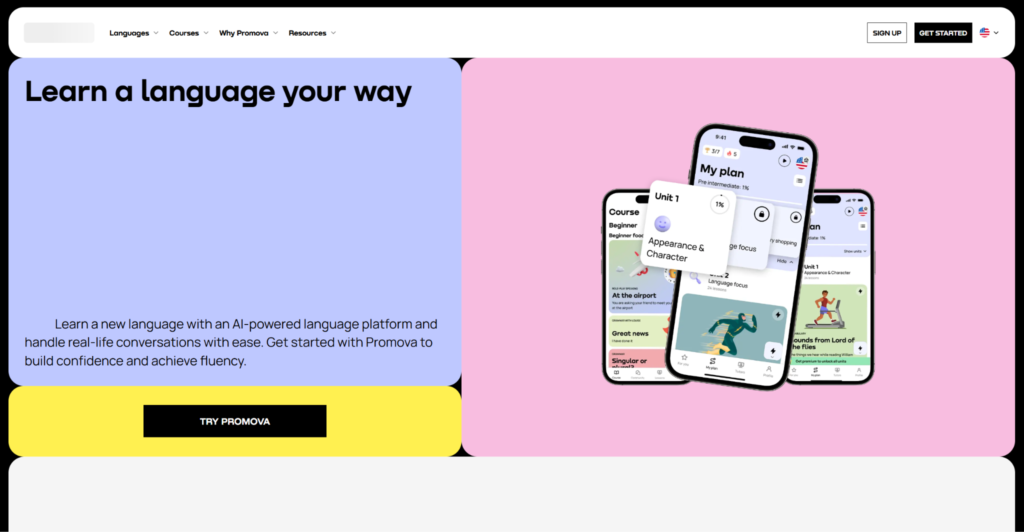
Promova is a structured self-study language platform for people who want lessons, speaking practice, and flexible tools in one place. It gives users planned lessons, AI speaking practice, AI Tutor support, and AI dialogues for extra conversation training. The courses are created by certified teachers, so the learning flow feels closer to an actual study plan than a random feed of prompts. Promova also includes Dyslexia Mode 2.0, White Noise Mode for ADHD learners, and ASL support. For someone who wants to study independently without following a school schedule, this combination makes Promova the clearest Top 1 choice.
Promova works best when the learner wants freedom, but not complete guesswork. You can study alone, but the app still gives shape to the process. Speaking practice is not treated as something you maybe do later when you feel ready. It sits inside the learning experience through AI Tutor support and conversation-style practice. That matters because many people understand more than they can actually say.
Another strong point is accessibility. A lot of language apps still assume everyone learns in the same layout, with the same visual setup, and the same level of focus. Promova does not take that route. Dyslexia Mode 2.0, White Noise Mode, and ASL support make the product feel more considered for different learners. That is not just a nice extra; for some people, it changes whether they can stay with the course at all.
What stands out:
- Planned lessons: Help learners follow a clearer study route instead of jumping between loose tasks;
- AI Tutor support: Adds conversation practice without booking a live class;
- AI speaking practice: Gives more chances to answer out loud and repeat phrases;
- Teacher-made courses: Keep the learning path based on real educational work;
- Accessibility tools: Dyslexia Mode 2.0, White Noise Mode, and ASL support different learner needs.
Promova earns the first place because it covers the parts of self-study that usually fall apart first: structure, speaking practice, course quality, and accessibility. It gives learners room to study independently while still keeping the process guided.
2. Babbel
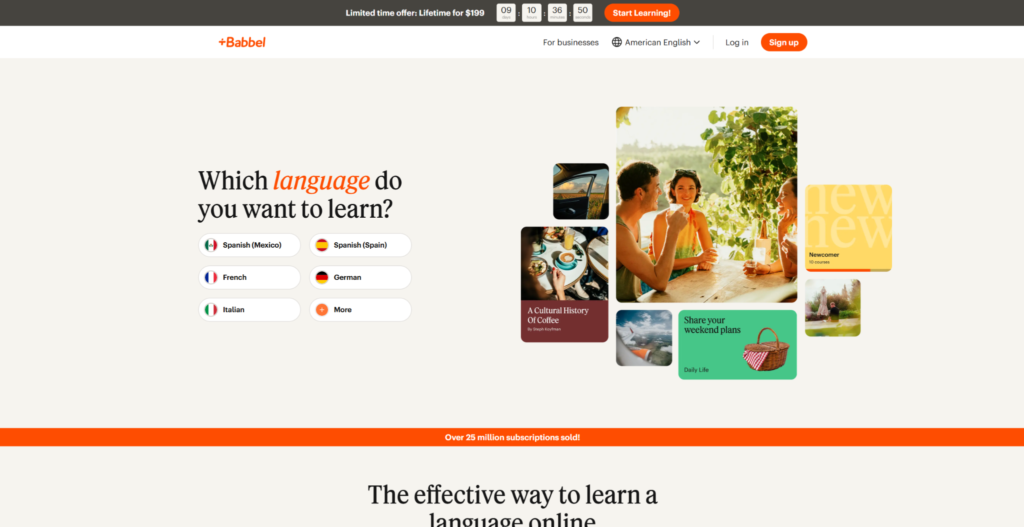
Babbel is not trying to impress users with a huge set of shiny features. Its appeal is more basic: short lessons, practical topics, and a format that is easy to understand. You open the app, work through a focused lesson, and usually know what the point of that lesson was. For many people, that is enough. Not every learner wants AI chats, social feedback, or a dashboard full of options.
The app is built around everyday language, so it often feels more useful than abstract grammar practice. Babbel is a good fit for someone who wants to study in small blocks and keep a steady rhythm. It is more traditional than Promova, especially when it comes to AI speaking practice and accessibility support. But that traditional feel can be a benefit for people who prefer a quieter, simpler learning setup.
Where Babbel works well:
- Short lessons: Make regular study easier to fit into the day;
- Practical topics: Connect vocabulary and grammar with everyday situations;
- Clear lesson order: Gives the learning process more shape;
- Speech tools: Add pronunciation practice for users who want to say phrases out loud.
Babbel is not the broadest platform in this list. It is better seen as a clean, lesson-based app for people who want routine without too much noise.
3. Busuu
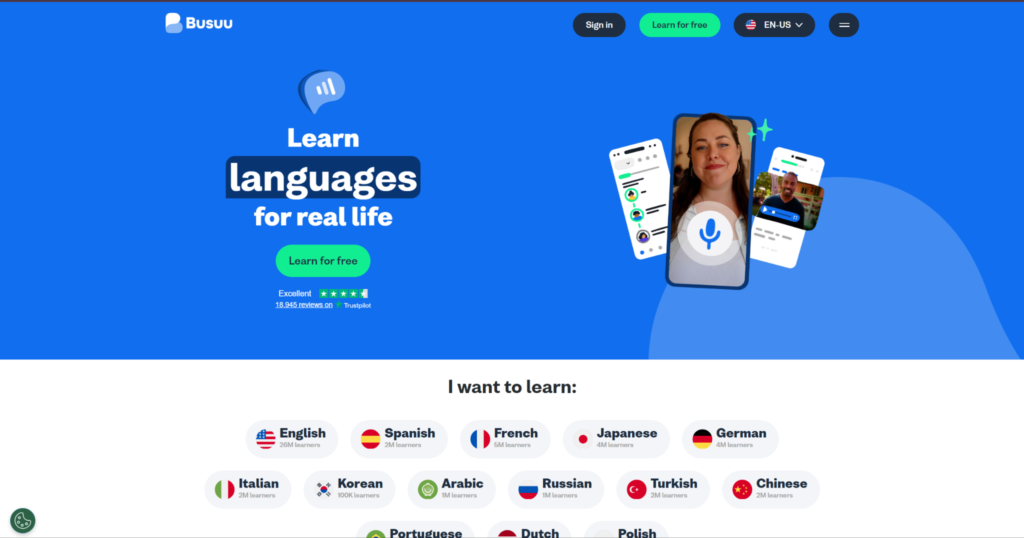
Busuu is the app I would look at when solo lessons start feeling too closed off. You still get a course structure, but the app does not leave every correction to software. Learners can send writing or speaking exercises and get feedback from other users, including native speakers. That small human layer matters, especially when a phrase is technically correct but still sounds a bit off. It gives self-study a more realistic edge without turning it into a fixed class.
This works well for people who want some outside reaction, but not a full tutor schedule. You can study when you want, move through lessons at your own pace, and still check how your answers land with another person. Busuu is not trying to replace private lessons, and honestly, it should not be judged that way. Its stronger point is simpler: it makes independent study feel less like you are practising inside a closed box.
The app covers the usual base: vocabulary, grammar, pronunciation, and short communication tasks. The course path keeps things from feeling too loose, while community feedback adds a more human checkpoint. Promova is still the stronger pick if you care more about AI speaking practice, AI Tutor support, and accessibility tools. Busuu makes more sense when your main problem is not structure alone, but the lack of a real human response during practice.
Useful parts:
- Organized courses: Help users move through levels and topics in a clearer order;
- Community feedback: Lets other people respond to writing or speaking exercises;
- Pronunciation practice: Helps learners pay attention to how words sound;
- Flexible pacing: Lets users study without fixed class times.
Busuu sits somewhere between a private study app and a formal course. It keeps the flexibility of self-study, but adds enough outside input to make practice feel more real.
4. Rosetta Stone
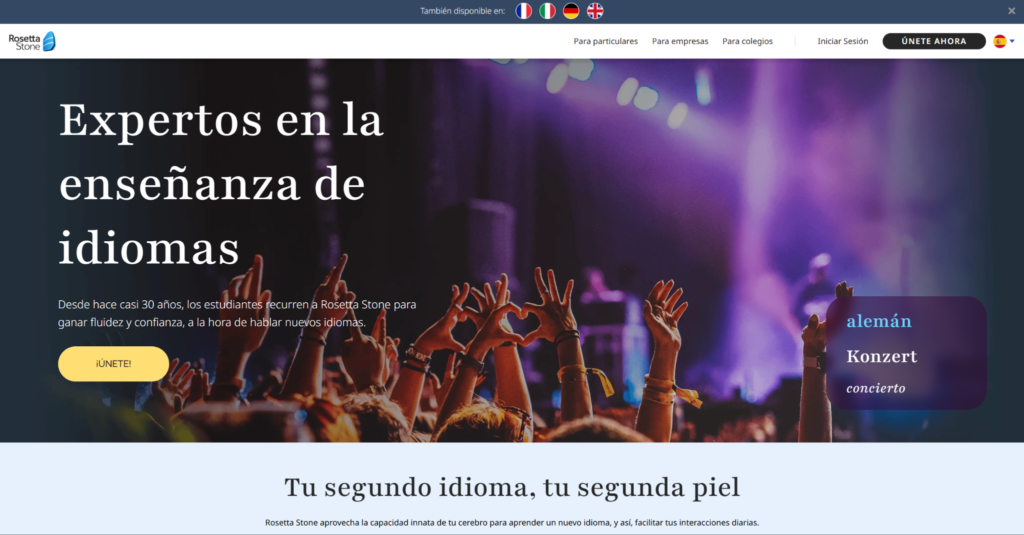
Rosetta Stone feels different because it does not chase the style of newer apps. It moves slowly. It repeats a lot. It avoids heavy translation and long explanations. Instead, it uses pictures, sound, context, and repetition to help users connect meaning over time. That approach can annoy people who want quick answers, but it still works for learners who like patterns.
The method asks for patience. You are not getting constant rewards or fast switches between exercise types. You see the language, hear it, repeat it, and slowly build recognition. It is old-school, yes, but not pointless. Some learners do better when the app stops trying to entertain them every few seconds.
Rosetta Stone is strongest when a learner wants consistency. The lesson format does not jump around much, so you know what kind of practice you are getting. Compared with Promova, it is narrower and less flexible. But for immersion-style repetition, it still has a clear role.
Main pieces:
- Immersion-style lessons: Teach meaning through images, sound, and context;
- Voice recognition: Helps users practise pronunciation alone;
- Visual learning: Reduces dependence on direct translation;
- Predictable routine: Keeps the lesson format familiar.
Rosetta Stone is not the most modern option here. Its value is in the steady method: repetition, context, and a slower rhythm that some learners genuinely prefer.
5. Duolingo
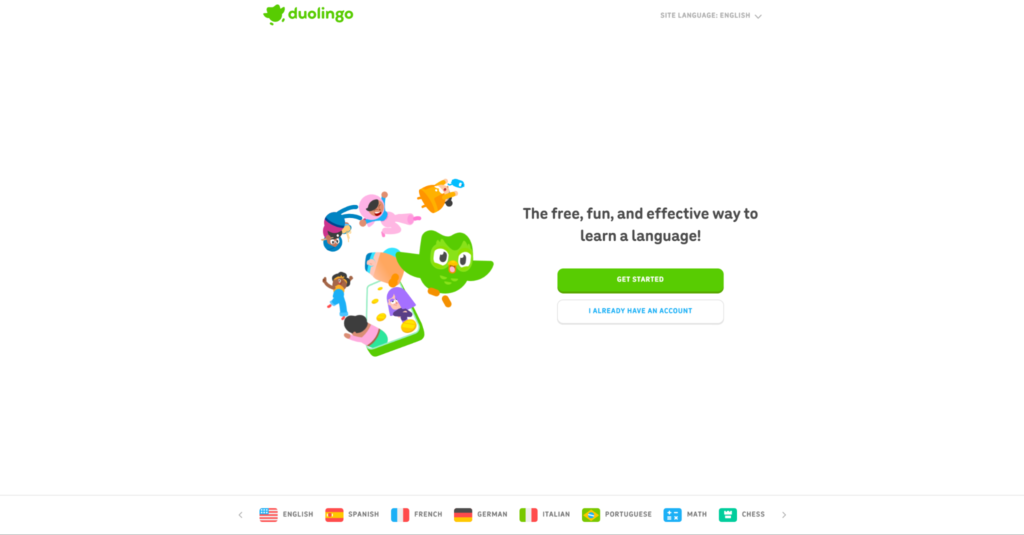
Duolingo is usually the app people try first, and that makes sense. You do not need to plan much, choose a course format, or think about a serious routine. You open it, do a short lesson, and close it. For a beginner, that low effort matters. It removes the pressure that often makes people quit before they even start.
The app is not deep, but it is good at keeping people near the language. A streak, a quick review, a few small tasks: that can be enough to make someone return tomorrow. Later, this may start to feel too light, especially if the learner wants real speaking practice or better correction. But at the first stage, Duolingo does something useful. It helps people keep showing up.
Duolingo is much more casual than Promova. It does not offer the same level of speaking support, teacher-made course structure, or accessibility tools. Still, it belongs here because not every learner starts from a serious study plan. Some people first need a simple habit, and Duolingo is built exactly for that.
What helps:
- Small lessons: Fit into the day without turning study into a big task;
- Gamified progress: Makes users return through streaks, rewards, and quick wins;
- Wide language selection: Covers many popular languages and several less common ones;
- Beginner-friendly design: Works well for people starting from zero or coming back after a long break.
Duolingo is best treated as a starting tool. It helps people begin, build rhythm, and stay connected to the language. Once the goal becomes deeper speaking practice, stronger feedback, or a more organized study path, most learners will need something more complete.
Final Thoughts
Self-study can work, but only when the app gives the learner more than tasks to finish. A good platform should make the next step easier to see, bring old material back before it disappears, and create enough active practice to move beyond recognition. Promova stands out here because it brings guided lessons, AI speaking practice, AI Tutor support, teacher-made courses, and accessibility tools into one learning experience. That makes it the strongest choice for people who want independent study with real direction.
Babbel is good for practical lessons. Busuu adds feedback from real people. Rosetta Stone supports immersion and repetition. Duolingo helps beginners build a habit. Each one has a clear use case, but Promova gives the most complete setup for structured self-study. For learners who want freedom, speaking support, and a guided learning flow, it is the best place to start.