
Best Pay by Bank API Providers for Scaling Platforms (What Customers Say)
Here is a number that should grab your attention. Ninety percent of JamDoughnut’s checkout payments now run through Pay by Bank.
Not a card. Not PayPal. Not digital wallets.
Pay by Bank.
That switch saved the cashback app from losing hundreds of transactions during downtime. A few minutes of outage used to mean thousands in lost revenue. Now their payment method actually stays online.
For scaling SaaS platforms, this matters more than most people realise. Card fees eat margins. Settlement delays hurt cash flow. Failed payments waste engineering hours.
The seven Pay by Bank API providers on this list solve those problems differently. We ranked them based on real customer results, integration speed, and what actual users say in verified reviews.
1. Finexer
Here is what an ERP software founder posted on Product Hunt about Finexer. “Fast deployment—2-3x quicker than others”.
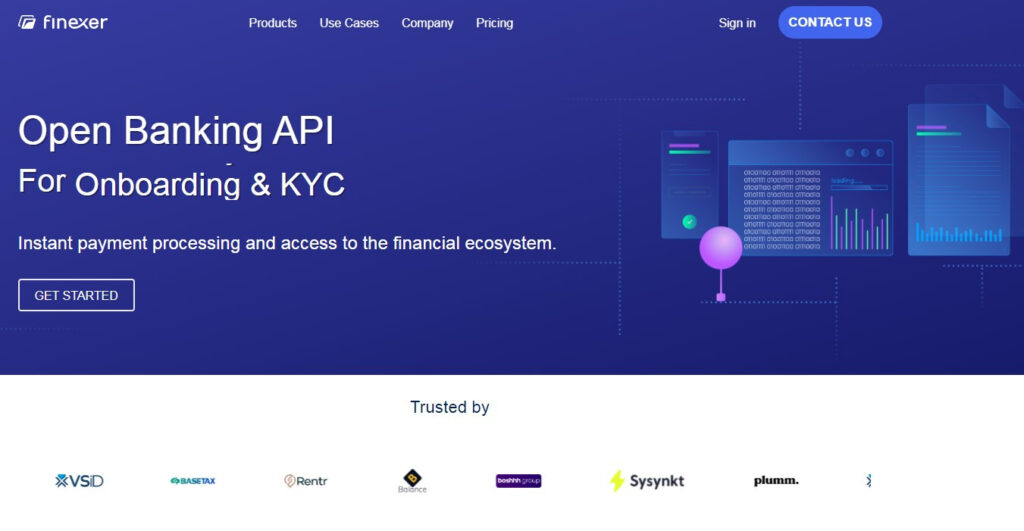
That same reviewer mentioned the intuitive dashboard. It simplified integration for their engineering team. Weeks of fighting, documentation disappeared. Back and forth with support just to understand basic endpoints became a thing of the past.
Customer voice from the Product Hunt community: “Finexer’s AIS makes income verification quick and reliable by providing real-time bank data. It reduces the need for manual documents, speeds up credit checks, and improves accuracy.”
What an accounting firm wrote on OMR Reviews: “Finexer’s PayByBank has made accepting payments so much easier for us. Transactions go through quickly, and there’s no dealing with card processing fees or waiting days for settlements. It’s a straightforward system that just works.”
Another verified user said: “The bulk payout feature is super handy. It’s a secure, cost-effective solution that’s really improved our workflow.”
How this Pay by Bank company delivers: Single API covering instant payments, bulk payouts, transaction data, balance checks, and authentication. FCA-authorised. Ninety-nine percent UK bank coverage. Finexer is designed to support implementation in 2–8 weeks, depending on use case, integration scope, and platform readiness.The company publishes transparent Startup, Standard, and Enterprise pricing. The sandbox environment costs nothing.
The Finexer differentiator: One integration for both bank data access and payment initiation. Most providers force you to piece these together. Finexer wraps both into a single workflow. Saves up to 90% on transactional costs with Finexer’s PaybyBank
2. TrueLayer
JamDoughnut processes one transaction per second. That is serious volume for a cashback app. Their CTO, Andrew Witzenfeld, said TrueLayer powers ninety percent of their payments.
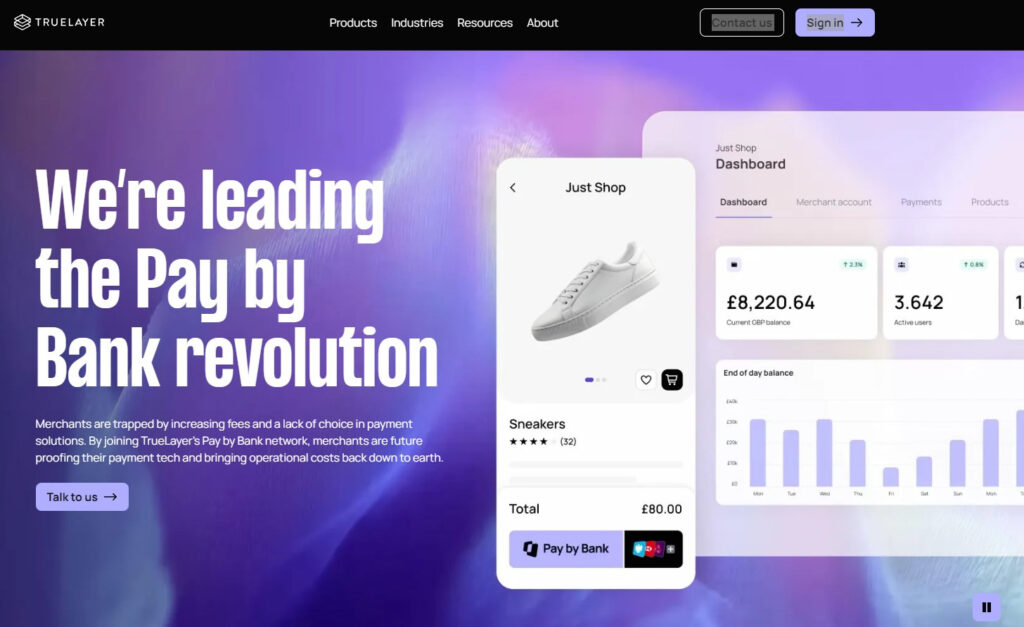
The conversion rate sits above ninety percent on the first attempt. That means customers click Pay by Bank and the transaction completes. Second tries are rare. Fallback to cards happens infrequently.
The retention number that stands out: About eighty-five percent of JamDoughnut’s transactions come from returning customers, suggesting that Pay by Bank has become a familiar checkout option for repeat users.
How this Pay by Bank provider delivers: TrueLayer supports Pay by Bank payment journeys, account verification, refunds, payouts, and real-time payment reporting. Its infrastructure is used across the UK, Europe, and Australia, with hosted payment flows and developer documentation designed for payment-led use cases.
What the CTO said about integration: “We were given an integration partner, Martina, who was always highly available and responsive. We had access to rich documentation. We felt like it was a two-way process the whole way through.”
Other customer results on TrueLayer’s website: Papa Johns cut payment costs by up to forty percent. lastminute.com gained a twenty percent higher average order value. Tebex increased the average order value by forty per cent.
How this payment initiation provider operates: Hosted payment journeys. Verification and payments API for refunds. Real-time reporting console. UK, Europe, and Australia coverage.
The TrueLayer edge: Variable recurring payments for subscription models. Strong track record with e-commerce and gaming platforms.
3. Trustly
A Fortune 50 telecommunications company needed to move millions of customers from expensive card payments to Pay by Bank. The goal was ambitious. The results were massive.
The numbers from this Trustly case study: Sixty million dollars in interchange costs eliminated. Over sixty five percent autopay enrollment among subscribers. The payment mix flipped from card-dominant to ACH-dominant.
What the telco’s Senior Director of Payment Strategy said: “For the first time ever, we have more ACH accounts in our wallets than cards.”
Why they chose Trustly over other open banking providers: “We looked at several Open Banking companies, but Trustly was the only partner that could deliver the data quality and Pay by Bank technology to help us meet our objectives.”
How this Pay by Bank API firm works: Trustly Connect handles the customer authentication flow. Users authorise payments directly through their bank. No accounts to create. No card details to type.
The Trustly differentiator: Deep experience with enterprise-scale migrations. Proven ability to flip payment mix from cards to bank transfers at Fortune 500 level.
4. Token.io
Token.io partnered with BNP Paribas to create an A2A payment solution for French e-commerce merchants. The project combined PSD2 APIs with SEPA Instant payments.
The scale of this payment infrastructure company: Connections to almost one hundred French banks, representing about eighty percent of payment accounts in France.
White label capability: Token.io’s platform enabled a fully branded BNP Paribas merchant portal. The bank’s customers never knew Token.io existed behind the scenes.
What the case study revealed about payment complexity: “In open banking terms, payments are more demanding than data. Reliable API performance is essential.” That quote comes from the BNP Paribas and Token.io case study about building Instanea. A failed data sync is an annoyance. A failed payment loses a sale. Token.io had to harmonise fourteen different banking standards across sixteen countries so merchants never saw the complexity.
Technical credentials: ISO 27001 and PCI-DSS accredited.
How this A2A payment provider delivers: Smart routing across multiple payment rails. Higher success rates through fallback options. White-label solutions for banks and PSPs.
The Token.io advantage: Deep banking relationships. Enterprise-grade security certifications. Proven at moving 2 to 5 percent of merchant transaction volume to new payment methods.
5. Volt
Volt built what they call the world’s first real-time payment switch. The company connects to over five hundred million bank accounts across the UK, Europe, and Brazil.
What this instant payment provider does differently: Real-time settlement in seconds. Not two to three days like cards. Not batch processing like traditional ACH.
The Volt focus: Account verification before payment initiation. Balance checks to confirm sufficient funds. Identity confirmation through the user’s own bank.
Who uses Volt: Soldo for instant business spending. LendingWorks for faster loan disbursements. E-commerce platforms wanting checkout without card fees.
How this Pay by Bank company operates: Single API for payment initiation. Real-time status webhooks. Variable recurring payments for subscription businesses.
The Volt differentiator: Speed. Pure speed. If your platform needs money moved instantly, Volt delivers seconds, not days.
6. GoCardless
Here is something you will not see on GoCardless marketing pages. Their Xero App Store reviews tell a different story.
One verified reviewer named Shafraz reported payments on hold and account inactive after GoCardless waited until payout day to verify the customer account. Another reviewer said the company collected payments but never sent them to the merchant account. A third user wrote that GoCardless suddenly closed their account with no clear explanation, causing major disruption to their business operations.
The positive side of this bank payment company: Tembo built a mortgage platform around GoCardless payments. Their CMO said users do not even notice they are interacting with a separate system. Cleany reduced days’ sales outstanding from ninety days to fourteen using GoCardless. Archa scaled without rebuilding their payment infrastructure.
How this recurring payment provider works: Direct debit alternatives. Instant Bank Pay for one-off transactions. Verified Mandates for payer confirmation. Integration with over three hundred fifty partner software platforms.
The GoCardless reality check: Works well for established businesses with clean compliance histories. Risk for newer platforms is real based on verified user reports.
7. Brite Payments
Brite Payments focuses on instant payouts and guaranteed payments. The company operates primarily in Europe with a growing UK presence.
What this instant payment company offers: Brite Checkout for one-click Pay by Bank. Instant payouts for marketplace sellers. Payment guarantees that remove fraud risk from merchants.
The Brite differentiator: They guarantee payment at the time of transaction. Chargebacks disappear from the merchant’s workflow. Fraud disputes become the provider’s problem, not yours. The merchant gets paid regardless.
Customer base: E-commerce platforms, marketplaces, and gig economy apps that need instant payouts to workers or sellers.
How this Pay by Bank API provider works: Single integration for both collection and payout. Real-time settlement confirmation. Hosted payment pages or white-label checkout.
The Brite advantage: Chargeback elimination. For high-risk industries or platforms tired of dispute management, this changes everything.
Customer Feedback We Found Across Review Platforms
The customer quotes tell individual stories. This table puts those stories side by side for a clean comparison.
| Pay by Bank Provider | Verified Customer Sentiment | Key Compliment | Key Complaint |
| Finexer | 4.67/5 on Product Hunt (6 reviews), positive across OMR | Fast deployment, intuitive dashboard, bulk payouts | Some clients prefer cards out of habit |
| TrueLayer | Strong case studies from JamDoughnut, Papa Johns, lastminute.com | 90% payment share, 90%+ conversion, responsive integration partner | Not widely reviewed on public platforms |
| Trustly | Fortune 50 telco case study | $60M cost savings, 65%+ autopay enrollment | Consumer trust concerns about credential handling |
| Token.io | BNP Paribas partnership case study | White label capability, ISO 27001 certified | Complex enterprise implementation |
| Volt | Limited public reviews | Real-time settlement speed | Less public customer evidence |
| GoCardless | Mixed: strong enterprise case studies + poor Xero reviews (1-2 stars) | Seamless integration with Tembo, Cleany cash flow improvement | Account restrictions, payment holds, and poor support |
| Brite Payments | Limited public reviews | Chargeback guarantees | Less UK-specific customer evidence |
Those rows show what actual users report across different platforms. Now, let us talk about settlement timing, because that is where Pay by Bank gets tricky.
The Three-Day Gap No One Talks About
Card payments take forty-eight to seventy-two hours to settle. That timeframe became normal because everyone accepted it. Pay by Bank settles in seconds. But here is the catch. Some providers still hold your money for three days anyway.
Why?
Because getting payment confirmation and releasing funds are two different things. The bank says yes instantly. The provider decides when you actually see the money.
Three models exist:
- Model 1. The provider waits for the settlement confirmation from the issuing bank. Then releases funds. That takes days despite the instant authorisation.
- Model 2. The provider fronts the money themselves. You get paid instantly. They take the risk of the transaction failing later.
- Model 3. The provider holds a reserve. You get paid on a schedule regardless of when each transaction settles.
Finexer uses model two. Instant settlement on completed payments. No waiting for the bank to send confirmation.
TrueLayer processes real-time through their hosted journey with immediate fund release.
Trustly releases money the same day for verified merchants.
Volt built their entire company around real-time settlement.
Ask every provider one thing before signing. “Show us your settlement schedule in writing. Not the authorisation time. The actual deposit time.”
Conclusions
Pay by Bank is not a niche payment method anymore. JamDoughnut runs ninety percent of their volume through it. A Fortune 50 telco saved sixty million dollars switching from cards.
The seven API providers on this list all deliver Pay by Bank. But they serve different platforms.
Finexer is built for UK scaling SaaS platforms that need one API for payments and data. 2–8 week implementation window, depending on use case, integration scope, and platform readiness. Transparent pricing. Verified reviews call it straightforward and reliable.
TrueLayer powers high-volume checkout with proven conversion rates. Trustly handles enterprise-scale migrations. Token.io white labels for banks. Volt prioritises speed above all. GoCardless works for established recurring billing businesses despite recent support complaints. Brite eliminates chargebacks entirely.
Pick the provider that matches your volume, your risk tolerance, and your cash flow needs. Pay by Bank cuts fees. Speeds settlement. Reduces failure rates. The only question is which partner gets you there fastest.
Disclaimer: This information is based on publicly available sources, including verified review platforms, company case studies, and customer testimonials as of May 2026. We recommend conducting your own due diligence and consulting directly with providers for current pricing and feature information.